
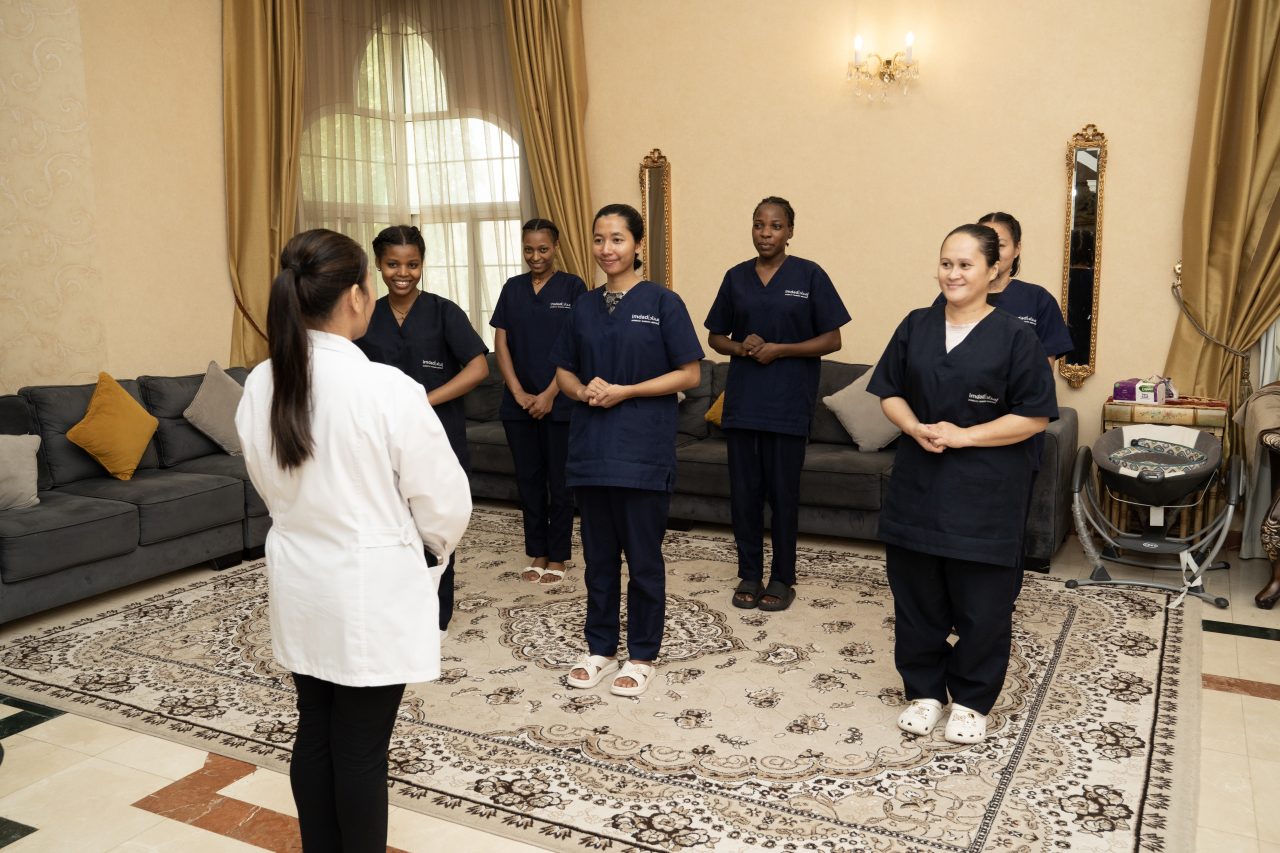
The United Arab Emirates (UAE) is home to thousands of domestic workers who play a vital role in supporting households across the country. Whether you are working as a nanny, housemaid, cook, or caregiver, it’s essential to understand your rights, responsibilities, and the legal protections available to you.
This comprehensive guide for domestic workers in the UAE is designed to help you stay informed and empowered in 2025. The UAE government has clear laws in place to ensure fair treatment, decent working conditions, and protection against exploitation. From employment contracts and wages to work hours, rest days, and safety measures, knowing the rules will help you build a stable and secure life.
Whether you’re new to the country or have been working here for years, this guide will walk you through everything you need to know about maid visa rules in the UAE, labor rights for domestic workers, and how to seek help if something goes wrong. Staying informed is the first step toward a better and safer work experience.
Welcome to the UAE: A Multicultural Nation
The United Arab Emirates is more than just a place to work—it’s a global hub of culture, opportunity, and tolerance. As a domestic worker arriving in the UAE, you are becoming part of a truly diverse and inclusive society. With over 200 nationalities living and working together, the UAE stands as one of the most multicultural countries in the world.
Despite its rapid modernization, the UAE stays rooted in its Arab and Islamic heritage while welcoming people of all backgrounds. The nation is internationally recognized for fostering harmony, peaceful coexistence, and religious tolerance among its citizens and residents.
As a domestic worker in the UAE, you’ll find that laws and social values are built to protect you, promote dignity in employment, and ensure mutual respect among communities. From your workplace to your neighborhood, you will interact with people from many cultures—an experience that can be both enriching and educational.
The UAE government promotes non-discrimination, bans abusive behavior, and enforces strict penalties for anyone who violates the rights of others, regardless of nationality or background. This strong commitment to equality makes the UAE not just a place of employment, but a place where you can feel safe, respected, and included.
Whether you’re here temporarily or for a long-term career, knowing you’re in a country that values diversity, tolerance, and community wellbeing can make your journey smoother and more meaningful.
Before You Start: Legal Documents and Medical Tests in the UAE
Before beginning your employment as a domestic worker in the UAE, there are a few important legal steps that must be completed to ensure you are working and living in the country legally and safely.
🛂 UAE Residency and Emirates ID
Every foreign worker in the UAE, including housemaids, nannies, and domestic helpers, must obtain a valid UAE residency visa. This visa is issued under the sponsorship of your employer—either an individual or a registered domestic worker agency. Once your residency visa is approved, you will also receive your Emirates ID card, an official identification card issued by the UAE government.
Your Emirates ID is essential for accessing government services, health care, and even opening a bank account. It is valid for up to 3 years and must be renewed before it expires. After your visa expires, you have a grace period of 30 days to renew it—failing to do so will result in daily fines.
🧪 Medical Examination and Health Insurance
Before your residency visa is issued, you must undergo a medical examination at an authorized health center. This test confirms that you are medically fit to work and helps protect both you and your future employer. After passing the medical test, you will also be enrolled in a health insurance plan, which is a mandatory requirement under UAE labor laws.
Medical exams and health insurance ensure that you are protected in case of illness and that you do not pose any health risks in a domestic environment.
🆔 Always Carry Valid Identification
Once your Emirates ID is issued, you are legally required to carry it with you at all times. While waiting for your Emirates ID, you should carry a copy of your passport and valid residency visa. Government inspectors may request to see your ID at any time, especially during official checks.
In the case of loss or theft of your documents, report it immediately to the nearest police station to avoid legal issues or misuse of your identity.
Employment Contract & Offer Letter: Your Legal Shield
As a domestic worker in the UAE, your employment officially begins only after receiving a valid employment offer letter followed by a properly signed employment contract. These documents are not just formalities—they are your legal protection and guarantee your rights in the workplace.
📄 Must Be in a Language You Understand
Before signing anything, make sure that your employment contract is provided in a language you clearly understand. This is a legal requirement in the UAE to protect workers from being misled or agreeing to terms they don’t fully comprehend.
Never sign any document—whether it’s an offer letter or full contract—if it hasn’t been explained to you properly or is written in a language you cannot read. If needed, ask the concerned government department or Tadbeer center for help before signing.
✅ Must Match the Offer Letter
Your final employment contract must reflect exactly what was promised in the initial job offer. This includes your job role, salary, working hours, accommodation, medical insurance, leave entitlements, and other benefits. If there is any difference between the contract and the offer letter, you have the right to raise the issue.
This rule ensures that you are not offered one thing before traveling to the UAE and then forced to accept different conditions once you arrive.
🚫 No Unauthorized Changes Allowed
Once you and your employer have signed the contract, no changes can be made unless:
-
The changes benefit you, and
-
You agree to them in writing, and
-
The changes comply with UAE labor laws.
Unauthorized alterations, or adding unfair clauses after signing, are not legally valid. Always keep a signed copy of your offer letter and employment contract with you as proof.
Your Rights at Work as a Domestic Worker in the UAE
As a domestic worker in the UAE, you are protected by the country’s labor laws that are designed to ensure fair treatment, decent working conditions, and legal protection for all employees—including housemaids, nannies, caregivers, and cleaners. Knowing your rights can help you avoid abuse and seek help when needed.
🛂 Work Permits Are Mandatory
Before you start working, your employer must obtain a valid work permit for you through the Ministry of Human Resources and Emiratisation (MOHRE) or a licensed Tadbeer center. Working without a legal work permit is against the law, and you can face legal action if found working under a different sponsor or employer.
Your work permit confirms that you are legally employed and protected under UAE labor laws. Never agree to work for anyone who is not your official sponsor.
⏱️ Maximum Working Hours: 8 Hours a Day / 48 Hours a Week
The standard legal working hours in the UAE are 8 hours per day or 48 hours per week. In certain sectors like hospitality, these hours may extend to 9 hours, but domestic workers must not be overworked beyond legal limits. During the holy month of Ramadan, working hours are reduced by 2 hours daily.
Importantly, commuting time to and from your workplace does not count as part of your official working hours.
💰 Overtime Pay & Weekly Rest
If your employer asks you to work beyond the standard working hours, you are legally entitled to overtime pay:
-
At least 25% extra for regular overtime
-
At least 50% extra for late-night work (between 9:00 PM and 4:00 AM), on Fridays, or on public holidays
You are also entitled to one full day of rest per week, usually Friday, unless otherwise agreed upon in your contract. If you work on your rest day, you must either receive another day off or additional pay (your basic wage + 50% bonus).
🩺 Paid Sick Leave, Maternity Leave, and Annual Leave
📆 Annual Leave:
-
You are entitled to 2 days of paid leave per month if you’ve worked for 6 months to 1 year.
-
After 1 year, you are entitled to 30 days of fully paid annual leave each year.
🤒 Sick Leave:
-
After completing your probation period, you can take up to 90 days of sick leave per year (paid, partially paid, or unpaid, depending on the duration and medical report).
-
You must notify your employer within 2 days of falling ill and undergo a medical check-up for verification.
🤰 Maternity Leave:
-
If you are a female domestic worker with at least 1 year of continuous service, you are entitled to 45 days of full-pay maternity leave.
-
If you have not completed one year, you are still eligible for 45 days with half-pay.
-
In cases of medical complications, you may take up to 100 additional unpaid days if supported by a certified medical report.
💳 Wage Protection System (WPS)
To ensure you are paid fairly and on time, your salary must be processed through the Wage Protection System (WPS)—a government-regulated platform that monitors monthly salary payments made through banks and financial institutions.
Your employer cannot deduct money from your wages except for specific, legally permitted reasons (e.g., fines or penalties not exceeding 5 days’ wages per month). All salary payments must follow what is stated in your contract.
What Not to Do: Avoiding Legal Trouble as a Domestic Worker in the UAE
Living and working in the UAE offers many opportunities, but it also comes with responsibilities. Understanding what not to do is just as important as knowing your rights. The UAE has strict laws and cultural expectations, and violating them can lead to fines, legal trouble, or even deportation. Here’s what every domestic worker in the UAE must avoid:
🚫 No Dual Employment
As a domestic worker, your work permit and residency visa are tied to a single sponsor—your official employer. You are not allowed to work for any other individual or company, even on a part-time or temporary basis.
Working under someone else, even during your off-hours, is considered illegal employment and may lead to a fine of AED 50,000, visa cancellation, and deportation. Always work only for the person or family who has legally sponsored your visa.
❌ Do Not Pay Recruitment Agents
According to UAE labor law, you should never pay a recruitment agent or agency for a job. Your employer is fully responsible for covering:
-
Visa costs
-
Medical test fees
-
Emirates ID application
-
Recruitment agency charges
Your financial relationship with the recruitment agency ends the moment you sign your employment contract. If an agency demands payment from your salary, report them immediately to the Ministry of Human Resources and Emiratisation. It is illegal for agents to deduct any amount from your wages.
📱 Be Cautious on Social Media and Public Behavior
The UAE has zero tolerance for online abuse or harmful social media content. As a resident, avoid:
-
Posting defamatory statements about individuals, countries, religions, or leaders
-
Sharing false accusations or private images
-
Engaging in public criticism of your employer or colleagues
Violating these rules can result in legal action, fines, and even imprisonment. Always use social media responsibly and with respect.
🕌 Respect Ramadan Etiquette and Cultural Norms
During the Holy Month of Ramadan, eating, drinking, or smoking in public during fasting hours (usually from sunrise to sunset) is strictly prohibited, even for non-Muslims. Respecting this rule is a vital part of cultural integration.
Additionally, observe the following rules throughout the year:
-
Do not consume alcohol or appear intoxicated in public
-
Avoid offensive or abusive language
-
Dress modestly, especially in public spaces
-
Never engage in romantic relationships or live with someone of the opposite sex unless you’re married or a blood relative
-
Any involvement in illicit relationships, adultery, or pregnancy out of wedlock can lead to detention and deportation
⚠️ Stay Within Legal and Cultural Boundaries
UAE laws apply equally to locals and foreigners. Ignorance is not an excuse. As a domestic worker, you are expected to respect local laws, Islamic values, and cultural customs. Doing so not only keeps you safe but also helps you enjoy a smoother and more fulfilling experience in the UAE.
If Things Go Wrong: Termination & Dispute Resolution for Domestic Workers in the UAE
While many domestic workers in the UAE enjoy stable and respectful working conditions, problems can arise. It’s important to know what your options are if you face unfair treatment, sudden termination, or if your rights are violated. UAE labor law provides clear procedures for termination, dispute resolution, and transferring to a new job—ensuring you’re not left helpless.
🔁 When You’re Eligible for a New Work Permit
You have the right to apply for a new work permit and seek employment with a new sponsor in the following situations:
-
Your employment contract has expired and was not renewed.
-
Your employer fails to pay your wages for more than 2 months.
-
The business sponsoring you is closed, and you’ve filed an official complaint.
-
Your employer terminates the contract without valid reason, and you’ve completed at least 6 months of service.
-
You have obtained a final legal ruling in your favor after filing a labor dispute.
⚖️ If your complaint is being investigated by MOHRE, or if the case has reached the Labor Court, you can request a temporary work permit so you can continue working legally during the process.
⚠️ Grounds for Dismissal Without Notice
An employer is legally allowed to dismiss you without prior notice under specific circumstances, such as:
-
Submitting forged documents or using a false identity.
-
Causing major financial loss through negligence or fault (must be reported to MOHRE within 48 hours).
-
Violating clearly communicated workplace safety rules.
-
Repeatedly failing to perform your duties after warnings.
-
Being absent without reason for over 7 consecutive or 20 intermittent days in a year.
-
Revealing confidential information about your employer.
-
Being found drunk or under the influence of drugs during work hours.
-
Assaulting the employer or co-workers.
-
Committing a crime involving honor or public morals and receiving a court sentence of over 3 months.
If dismissed under one of these grounds, you may not be entitled to full compensation or end-of-service benefits.
📝 How to File a Labor Complaint
If you believe your rights are being violated—due to non-payment, abuse, excessive working hours, or unfair dismissal—you can file a labor complaint. Follow these steps:
-
Visit a Tas’heel Office or call the MOHRE helpline (800 66473) to file an official complaint.
-
MOHRE will attempt to resolve the issue amicably within 48 hours.
-
If no resolution is reached, your case is passed to a legal advisor within MOHRE.
-
If the dispute still remains, it is escalated to a settlement judge, and then to the Labor Court.
-
Once a case is officially registered and you attend the first session, you can apply for a temporary work permit to legally continue working until the case is resolved.
You may also contact the Labor Complaints Service (Dubai Police Human Rights Department) at 901 if your issue involves harassment or abuse.
Knowing these procedures gives you the confidence and power to act legally and protect your rights. The UAE has systems in place to ensure that domestic workers are not exploited or left without support.
End of Service Benefits & Workplace Safety for Domestic Workers in the UAE
The UAE government has put in place clear regulations to ensure that domestic workers are not only fairly compensated at the end of their service but also protected against injuries or unsafe working environments. These rights are part of a broader commitment to uphold dignity, safety, and justice for all workers in the country.
💼 End of Service Benefits: Eligibility After 1 Year
If you have worked continuously for your employer for one year or more, you are entitled to end-of-service benefits. These benefits are calculated based on your last basic salary and the number of years you’ve worked, in accordance with UAE labor law or the terms stated in your employment contract—whichever is more favorable to you.
Key points:
-
Applies to contracts that are terminated either by the worker or the employer.
-
If your contract is terminated unfairly or without legal reason, you may also be entitled to additional compensation as determined by a labor court.
Having a written, signed contract helps ensure your right to receive these benefits is honored.
🛡️ Employer’s Duty to Provide Safety Gear and Health Insurance
Your safety at work is a legal responsibility of your employer. Whether you work inside a household or in a remote location (e.g., farms, private properties), your employer must ensure:
-
Proper safety equipment is provided for your tasks (gloves, masks, uniforms, etc.)
-
Clear instructions are given in a language you understand about preventing injuries and workplace accidents
-
Protective clothing and hygiene supplies are given to reduce health risks
-
Adequate ventilation, lighting, drinking water, and toilet facilities are available
In remote areas where access to shops or transport is limited, your employer is also required to provide:
-
Transport
-
Safe accommodation
-
Food and drinking water
-
Basic recreational facilities
-
First-aid kits
🚑 Right to Compensation for Workplace Injuries or Illness
If you suffer a work-related injury or occupational disease, the law ensures that:
-
Your employer must cover all medical costs, including hospital treatment, surgery, X-rays, lab tests, medication, and even prosthetics if needed.
-
You are entitled to receive your full wage for up to 6 months during your recovery.
-
If your recovery takes longer than 6 months, your wage may be reduced to half for the next 6 months.
-
If you are declared permanently disabled, additional compensation rules will apply, including long-term medical support or financial settlements.
🚫 However, you will not be eligible for compensation if:
-
You deliberately injured yourself
-
You were under the influence of alcohol or drugs
-
You violated clearly posted safety rules
-
You refused medical treatment or acted irresponsibly
This highlights the importance of following safety instructions and reporting any injury immediately.
By understanding your rights to fair compensation and a safe working environment, you can protect yourself and ensure that your employer fulfills their responsibilities under UAE law.
Living Respectfully in the UAE: Cultural Guidelines & Legal Boundaries for Domestic Workers
As a domestic worker in the UAE, you’re not only expected to follow employment rules—you are also part of a broader social fabric that values respect, tolerance, and cultural sensitivity. The UAE is home to more than 200 nationalities and is known for being one of the most diverse and peaceful countries in the world. However, it also has strict laws governing public behavior, and understanding these will help you stay safe and respected in your community.
🚫 No Discrimination
The UAE takes a strong stand against any form of discrimination based on religion, race, color, gender, or nationality. Whether through speech, writing, or action, any discriminatory behavior can lead to serious consequences, including fines, imprisonment, and deportation.
As a resident and worker, always treat others—employers, co-workers, neighbors, and fellow residents—with dignity and equality. Any comment or behavior that insults or offends others’ identity, religion, or ethnicity is considered a violation of UAE law.
🕌 Avoid Political or Religious Debates
Open discussions about politics, religion, or sensitive cultural matters are strongly discouraged in public spaces and especially in workplaces. Even if you are asked to join such conversations, it’s best to remain neutral and respectful.
Avoid:
-
Criticizing any country’s government or leaders
-
Making comments that could be seen as disrespectful toward Islam or any religion
-
Engaging in debates that could lead to arguments or misunderstandings
These topics are taken very seriously in the UAE, and even online discussions or social media posts on such issues can result in fines, detention, or deportation.
👗 Respect Public Morals, Behavior & Cleanliness
The UAE upholds public decency laws that apply to everyone—locals, residents, and visitors alike. Here are some guidelines you should always follow:
✅ Public Behavior
-
Dress modestly in public—avoid revealing or tight clothing.
-
Avoid public displays of affection, such as kissing or hugging.
-
Refrain from offensive language, shouting, or arguing in public.
-
Don’t be involved in illicit relationships, cohabitation with a non-relative of the opposite sex, or pregnancy out of wedlock—these are considered criminal offenses.
🚮 Cleanliness
-
Always dispose of your garbage in the proper way.
-
Littering, spitting, or polluting public areas can result in fines and penalties.
-
Keeping your environment clean is not only expected—it reflects your respect for the country and its people.
During Ramadan, avoid eating or drinking in public during fasting hours out of respect for those observing the holy month, even if you are not fasting yourself.
By following these social and cultural guidelines, you show your respect for the UAE’s values, avoid legal trouble, and build trust and acceptance within the community. Living respectfully in the UAE is not just about following laws—it’s about embracing tolerance, harmony, and shared responsibility.
Important Helplines Every Domestic Worker in the UAE Should Know
As a domestic worker living and working in the UAE, it’s essential to know where to turn for help, protection, or emergency support. The UAE government has established multiple hotlines and services to ensure that foreign workers—especially domestic helpers—can get fast and effective assistance when they face problems.
Whether you’re dealing with a workplace issue, a health emergency, or a legal concern, these official helplines can connect you with the right authorities and offer support in your language where possible.
📞 1. MOHRE – Ministry of Human Resources and Emiratisation
Hotline: 800 66473
If you have a labor complaint or questions about your employment rights, wages, or work permit, this is your primary contact.
Use this line to:
-
Report non-payment of salary
-
File complaints about contract violations
-
Get help with employer misconduct
-
Understand your legal rights as a domestic worker
You can also visit a Tas’heel center for in-person assistance with documentation and dispute filing.
🚓 2. Dubai Police or Ambulance – Emergency Services
Hotline: 999
Dial this number in any life-threatening emergency, including:
-
Harassment, violence, or abuse by employer or others
-
Health emergencies or accidents at work
-
If you are in danger or feel unsafe
Operators are available 24/7 and can dispatch police or ambulance services quickly.
🔥 3. Fire Department
Hotline: 997
Call this number to report a fire emergency at your workplace or accommodation.
If you see smoke, smell gas, or notice an unsafe electrical situation, do not wait—call immediately.
🛡️ 4. Al Ameen Services – Confidential Reporting
Hotline: 800 4 888
This is a confidential platform where you can report:
-
Suspicious activities or crimes
-
Workplace abuse or mistreatment
-
Any issue that you fear may bring harm to you or others
Al Ameen is especially helpful if you are afraid to speak directly to your employer or police.
🛃 5. Amer Service – Visa & Residency Enquiries
Hotline: 800 5111
Call Amer to get help with:
-
Questions about your residency visa or Emirates ID
-
Renewal deadlines and penalties
-
Lost documents (passport, visa)
-
Sponsorship transfers or issues with immigration
You can also visit https://www.dnrd.ae/en for more information about UAE residency laws.
🧾 Bonus Tip: Keep These Numbers Saved!
Write these emergency contacts down or save them in your mobile phone. You may also stick them on a visible place in your accommodation in case you or a fellow worker needs urgent help.
By knowing and using these helplines, you ensure your safety, legal protection, and access to support services at any time. The UAE takes worker rights and human welfare seriously, and these resources are here to help you live and work with confidence.
-
Transparent contracts and fair wages
-
All workers are provided legal work permits, health insurance, and support with Emirates ID and visa procedures
-
We offer ongoing training, guidance, and grievance support
-
If you face abuse, late salary, or illegal work conditions, our team helps you file complaints and protects your rights through proper legal channels
✅ For Employers:
-
We help families legally sponsor full-time, live-in maids with flexible contract durations (1 month to 2 years)
-
All recruitment and documentation are handled directly with MOHRE, ensuring 100% compliance
-
We offer unlimited replacements, medical coverage, and 24/7 client support
-
Our packages include no registration or cancellation fees, and we provide maids from the Philippines, Kenya, Ethiopia, Uganda, and Sri Lanka
🔒 Why Choose Imdad?
-
Government-regulated and 100% MOHRE-compliant
-
Ethical recruitment with no illegal fees charged to workers
-
Real-time status updates, replacement guarantees, and PRO services included
💬 Visit us at www.imdadhr.ae or call 043200961 to speak to our team today.
Let’s build a safe, respectful, and trustworthy domestic work environment—together.